
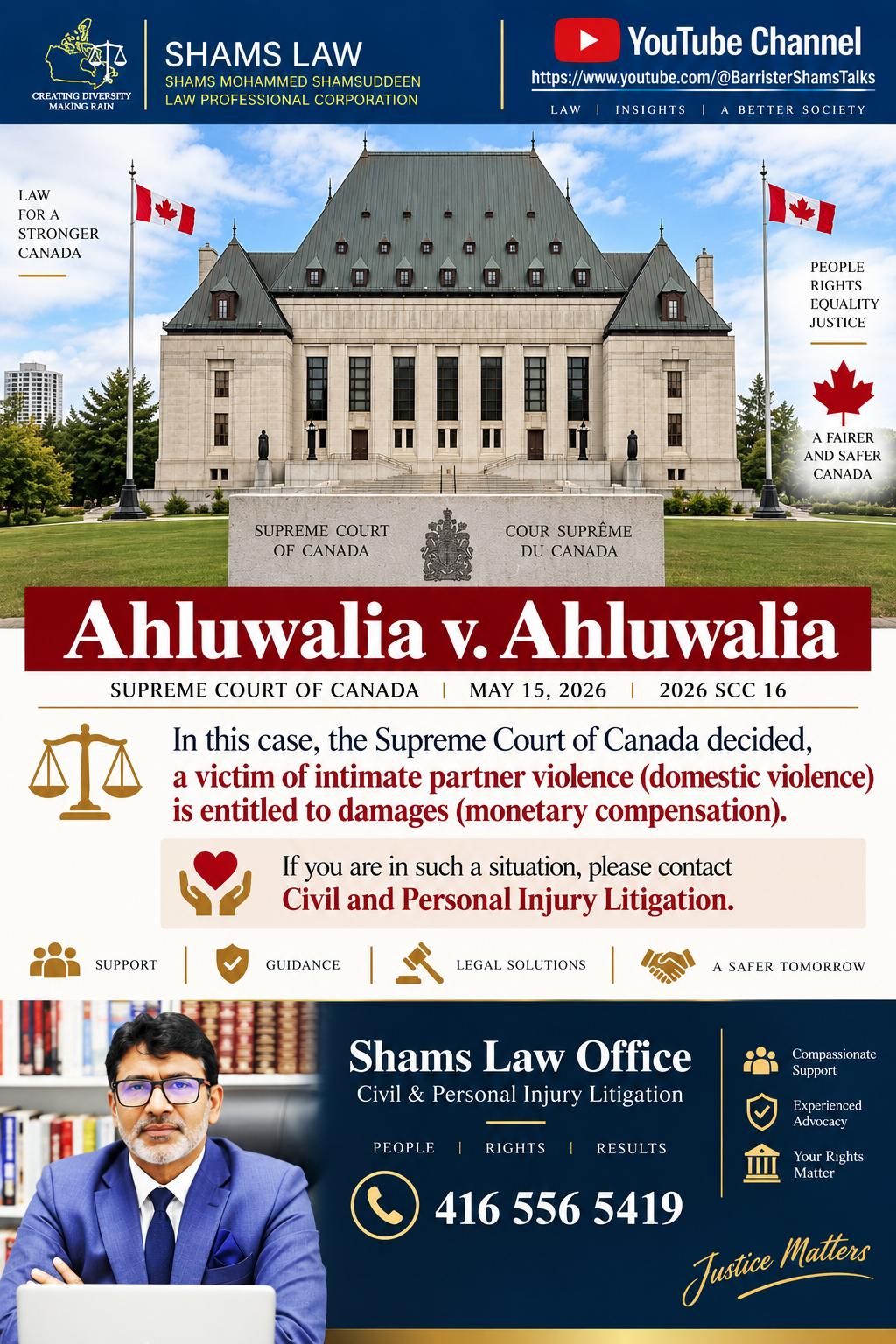
On May 15, 2026, the Supreme Court of Canada released its decision in Ahluwalia v. Ahluwalia, 2026 SCC 16. In a significant development in Canadian civil law, the Court recognized a new tort of intimate partner violence.
What the Supreme Court decided
The case arose from a 16-year marriage in which the wife experienced physical and emotional abuse. The Supreme Court concluded that existing torts, including assault and intentional infliction of emotional distress, do not always capture the full harm caused by coercive and controlling conduct within an intimate relationship.
The Court explained that intimate partner violence may involve more than individual incidents of physical violence. Depending on the circumstances, coercive control can include conduct such as isolation, humiliation, surveillance, financial control, sexual coercion, intimidation, and other behaviour that undermines a person’s dignity, autonomy, and equality within the relationship.
The new tort of intimate partner violence
For a claim under the newly recognized tort, the claimant must establish, in context, that:
- the wrongful conduct occurred during an intimate relationship or after the relationship ended;
- the other person intentionally engaged in abusive conduct; and
- the conduct amounted to coercive control when viewed in its full context.
In Ahluwalia, the Supreme Court held that these requirements were met and confirmed that damages were available under the new tort.
Why this decision matters
The decision is important because it recognizes that the harm caused by intimate partner violence can be broader than the harm caused by individual acts considered separately. A pattern of coercive and controlling behaviour may interfere with a person’s ability to make choices, exercise autonomy, and participate as an equal partner in a relationship.
The ruling may therefore have important implications in civil and family-law disputes where a person seeks monetary compensation for harm caused by intimate partner violence. Each case remains highly fact-specific, and the availability and amount of damages will depend on the evidence and the legal issues before the court.
Seeking legal advice
If you have experienced intimate partner violence or are dealing with a related civil claim, obtaining legal advice can help you understand the options that may be available in your circumstances.
Shams Law Professional Corporation assists clients with civil litigation and personal injury matters. To discuss your situation, contact our office at (416) 556-5419.
Legal information only: This article provides general information and is not legal advice. Reading it does not create a lawyer-client relationship. Legal rights and remedies depend on the specific facts of each case.
Case: Ahluwalia v. Ahluwalia, 2026 SCC 16, Supreme Court of Canada, May 15, 2026.